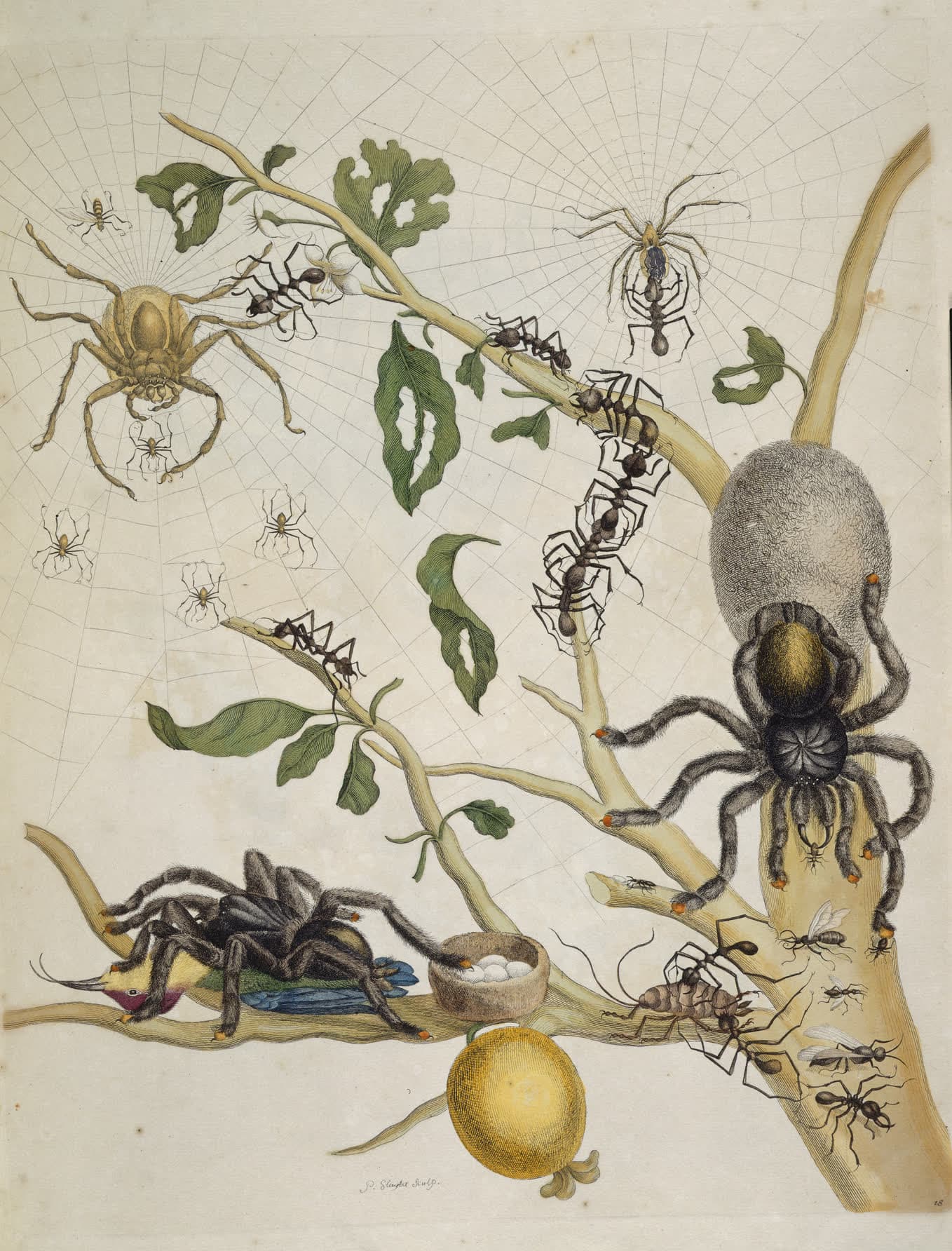
Study of Capers, Gorse, and a Beetle
Plant and insect, observed together, a century before Linnaeus.
- Work
- Study of Capers, Gorse, and a Beetle
- Artist / naturalist
- Maria Sibylla Merian
- Origin & date
- Germany/Netherlands, 1693
- Held by
- The Metropolitan Museum of Art
Format
The full-resolution scan, color-managed to the source — yours to print, study, and keep.
Size
$19.00
The story
Maria Sibylla Merian was one of the first naturalists — anywhere, of any gender — to study plants and insects as a single living system rather than separate curiosities, decades before that approach became scientific orthodoxy. This 1693 study pairs a caper branch and flowering gorse with a beetle rendered at the same scale and with the same care, a habit that ran through her whole body of work, culminating in her landmark Metamorphosis Insectorum Surinamensium. What to notice: Merian drew from direct observation, not from dried specimens or secondhand plates — the slight asymmetry of the caper's petals, the particular way gorse thorns crowd a stem, read as the record of a living plant in front of a living hand. It is botanical art doing double duty as entomology, three hundred years before ecology had a name.
About this reproduction
- Faithful reproduction of a public-domain work, sourced from The Metropolitan Museum of Art’s open-access release.
- Printed to order on 200gsm EMA matte art paper: smooth, no glare.
- Color-managed to the source scan.
- Ships in 5–8 business days; satisfaction guarantee.