The Timber Rattlesnake
A coiled rattlesnake, with its rattle and fang isolated for study.
- Work
- The Timber Rattlesnake (Vipera caudisona), from The Natural History of Carolina, Florida and the Bahama Islands
- Artist / naturalist
- Mark Catesby
- Origin & date
- London, 1731–1743
- Held by
- Wikimedia Commons
Format
The full-resolution scan, color-managed to the source — yours to print, study, and keep.
Size
$19.00
The story
Catesby coils his timber rattlesnake into a tight defensive spiral, head raised and tongue extended, its diamond-patterned body rendered scale by scale — one of the more technically demanding plates in the Natural History, and a reminder that Catesby documented the region's dangers as thoroughly as its beauty. Two supplementary studies flank the main figure: the segmented rattle itself, drawn at two different lengths to show how it grows with age (a new segment is added at each shed, though the popular myth that segment count reliably tells a rattlesnake's exact age is false), and a single isolated fang. What to notice: European audiences reading Catesby's book had largely never encountered a venomous snake firsthand — this plate functioned as much as a practical warning for prospective colonists as a scientific record, hazard and specimen in the same image.
About this reproduction
- Faithful reproduction of a public-domain work, sourced from Wikimedia Commons’s open-access release.
- Printed to order on 200gsm EMA matte art paper: smooth, no glare.
- Color-managed to the source scan.
- Ships in 5–8 business days; satisfaction guarantee.
From the same naturalist
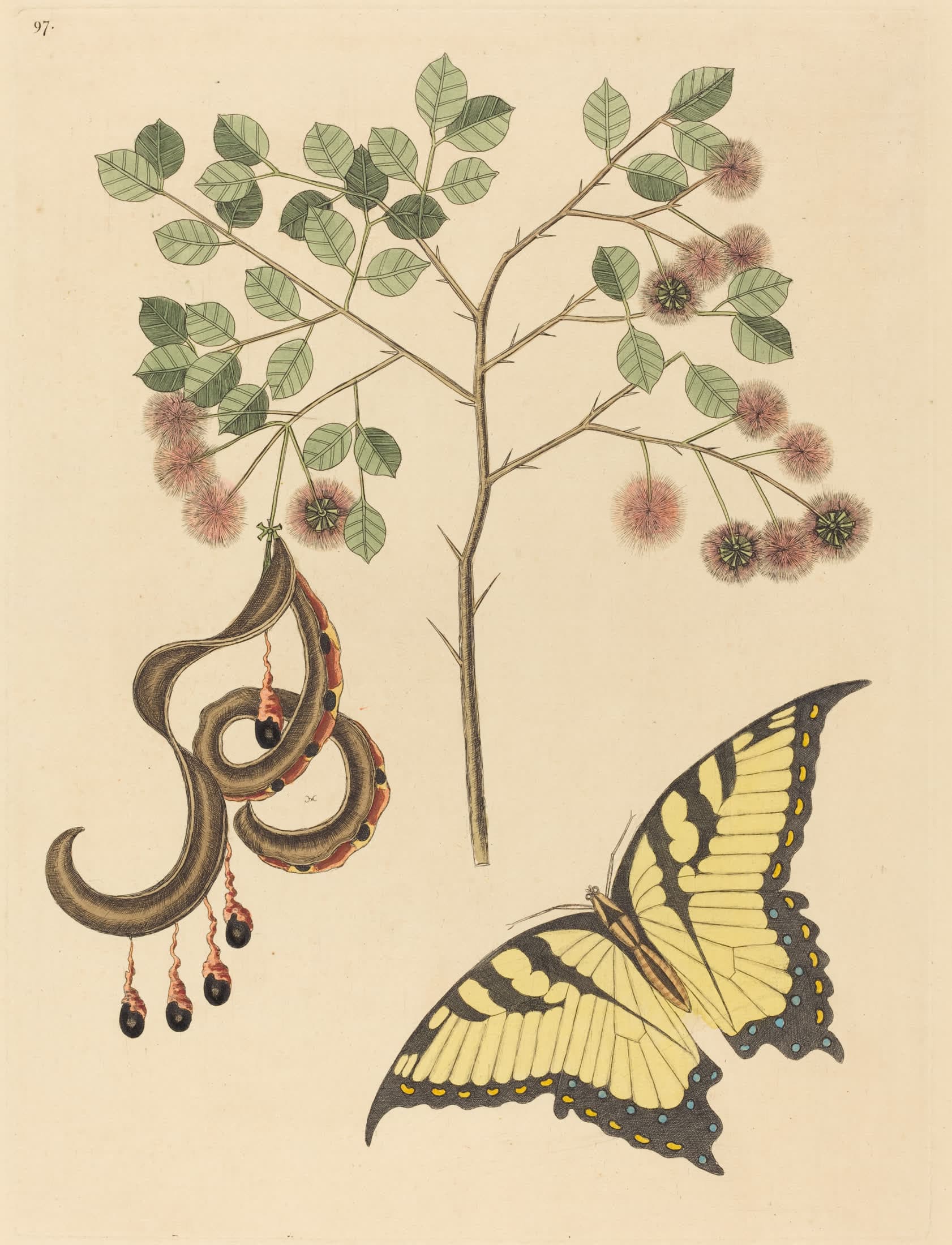
Cat’s Claw, with a Swallowtail
Plant and butterfly, paired the way Catesby paired every specimen in his book.
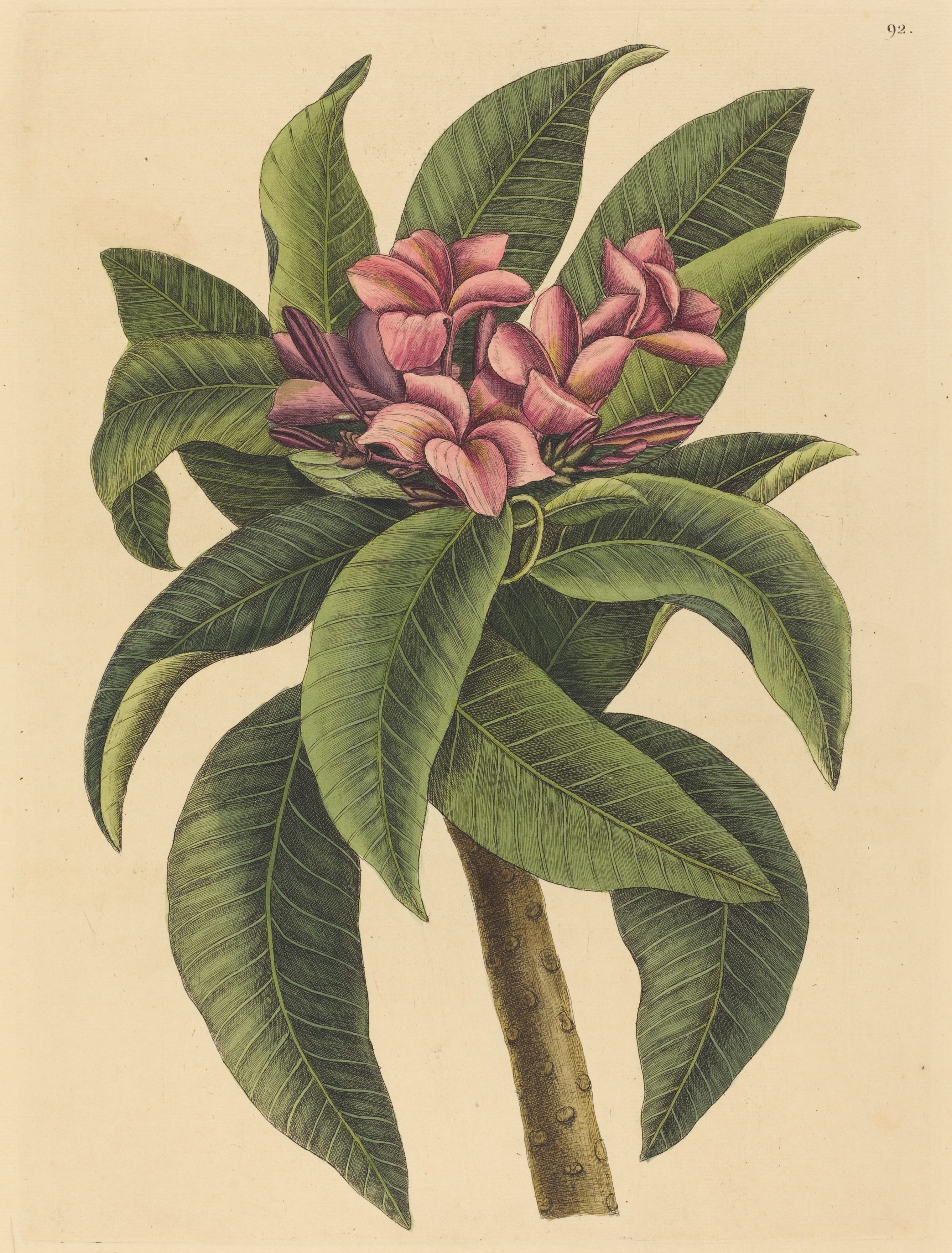
The Red Frangipani
A Caribbean bloom, recorded by the first naturalist to survey the colonial South.
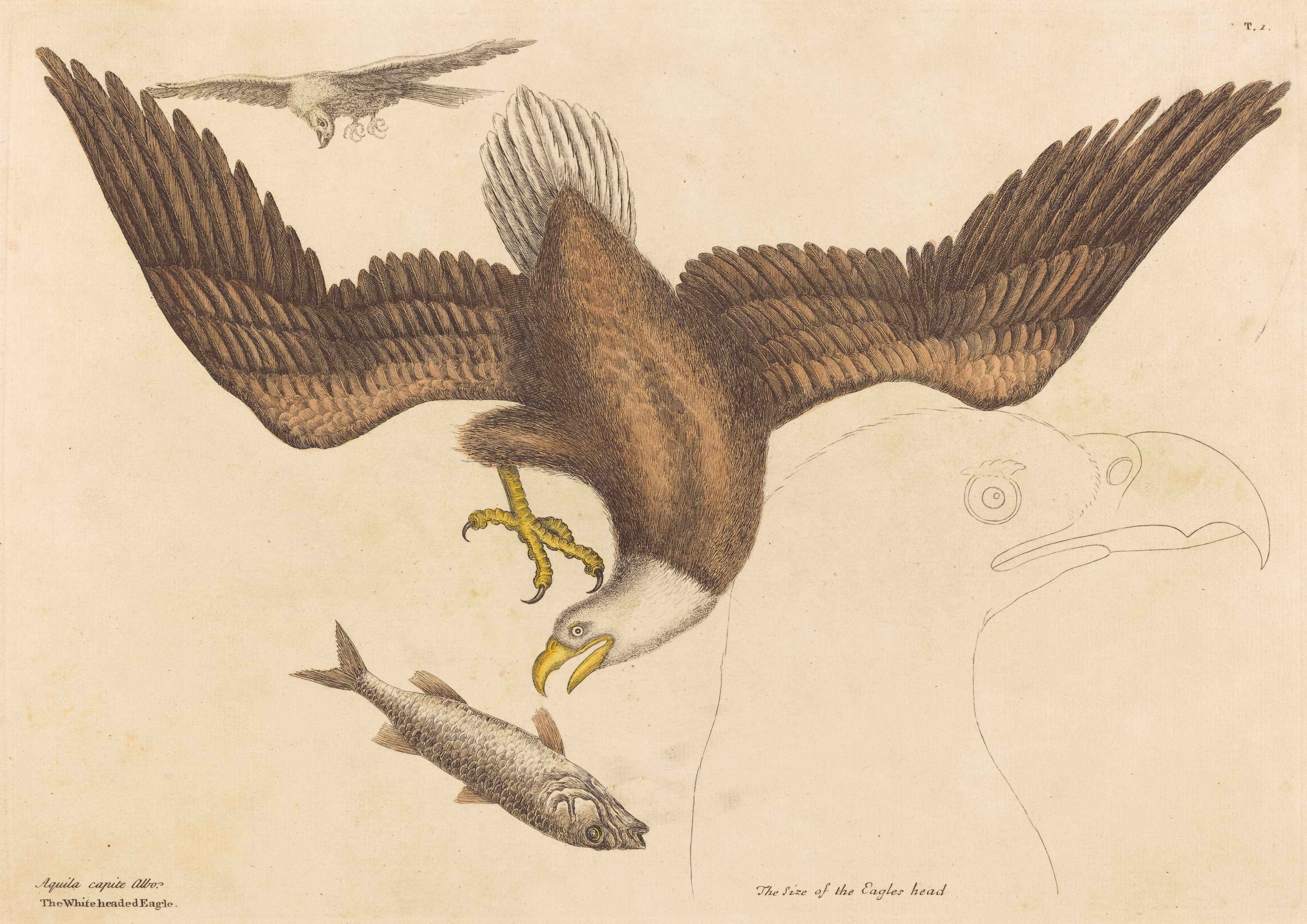
The White-Headed Eagle
The bald eagle, drawn seventy years before it became a national symbol.