The Golden-Winged Woodpecker
A flicker on a chestnut oak branch, paired the way Catesby paired every specimen.
- Work
- The Golden-Winged Woodpecker, with the Chestnut Oak, from The Natural History of Carolina, Florida and the Bahama Islands
- Artist / naturalist
- Mark Catesby
- Origin & date
- London, 1731–1743
- Held by
- Wikimedia Commons
Format
The full-resolution scan, color-managed to the source — yours to print, study, and keep.
Size
$19.00
The story
What Catesby called the golden-winged woodpecker is the bird now known as the northern flicker, shown gripping a chestnut oak branch heavy with acorns — Catesby's consistent habit of pairing each animal with a plant from its actual habitat, a compositional choice that functioned as an early, informal argument for ecological relationship decades before the science had a name for it. The flicker's barred back and spotted breast, along with the red crescent marking at its nape, are picked out in fine hand-applied color against the etched line beneath — every plate in the Natural History was colored individually after printing, meaning surviving copies vary somewhat from impression to impression. What to notice: flickers are unusual among woodpeckers for foraging on the ground as often as on trunks, hunting ants and beetles in open soil — a behavioral detail Catesby's static composition can only hint at, but one field naturalists would have already known.
About this reproduction
- Faithful reproduction of a public-domain work, sourced from Wikimedia Commons’s open-access release.
- Printed to order on 200gsm EMA matte art paper: smooth, no glare.
- Color-managed to the source scan.
- Ships in 5–8 business days; satisfaction guarantee.
From the same naturalist
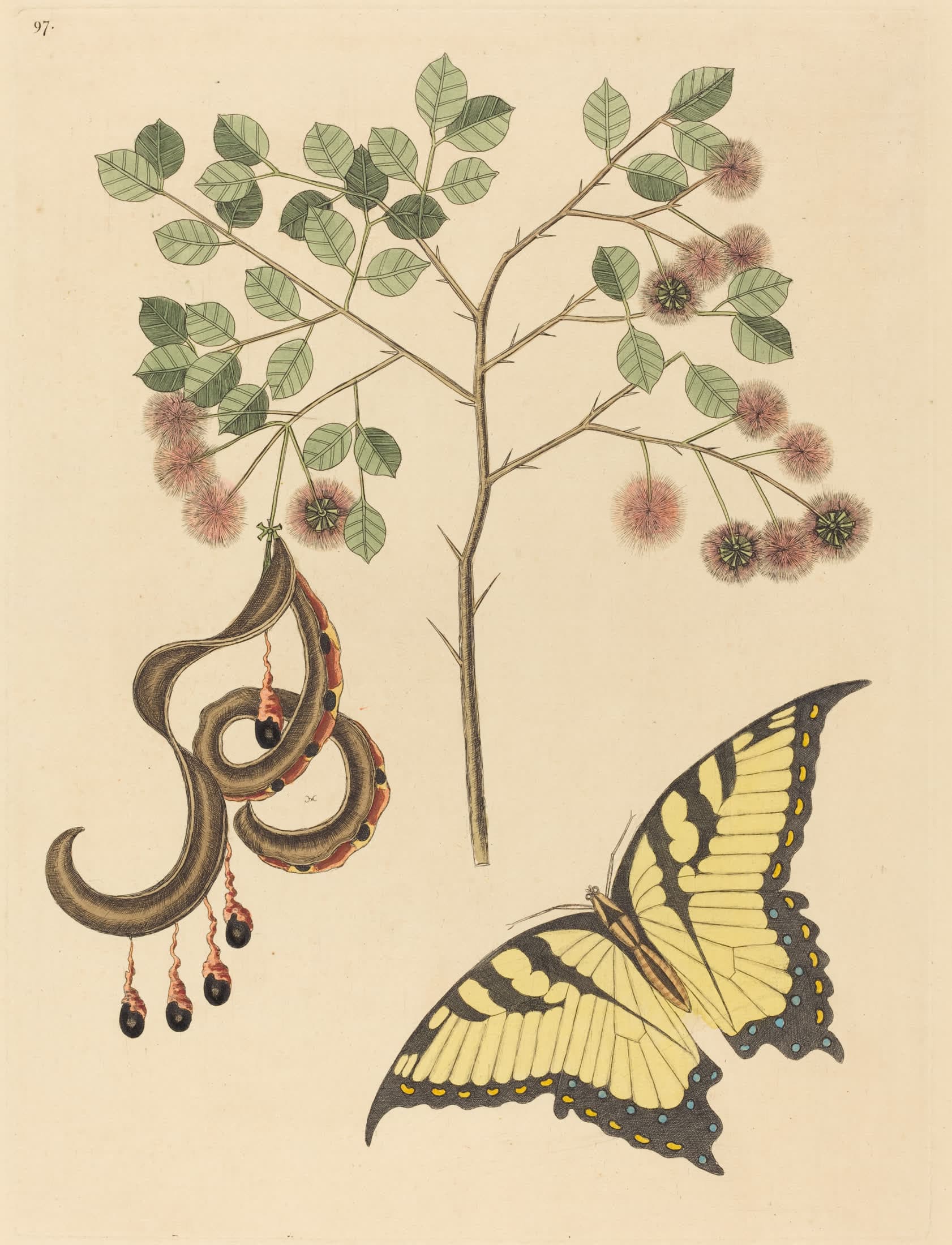
Cat’s Claw, with a Swallowtail
Plant and butterfly, paired the way Catesby paired every specimen in his book.
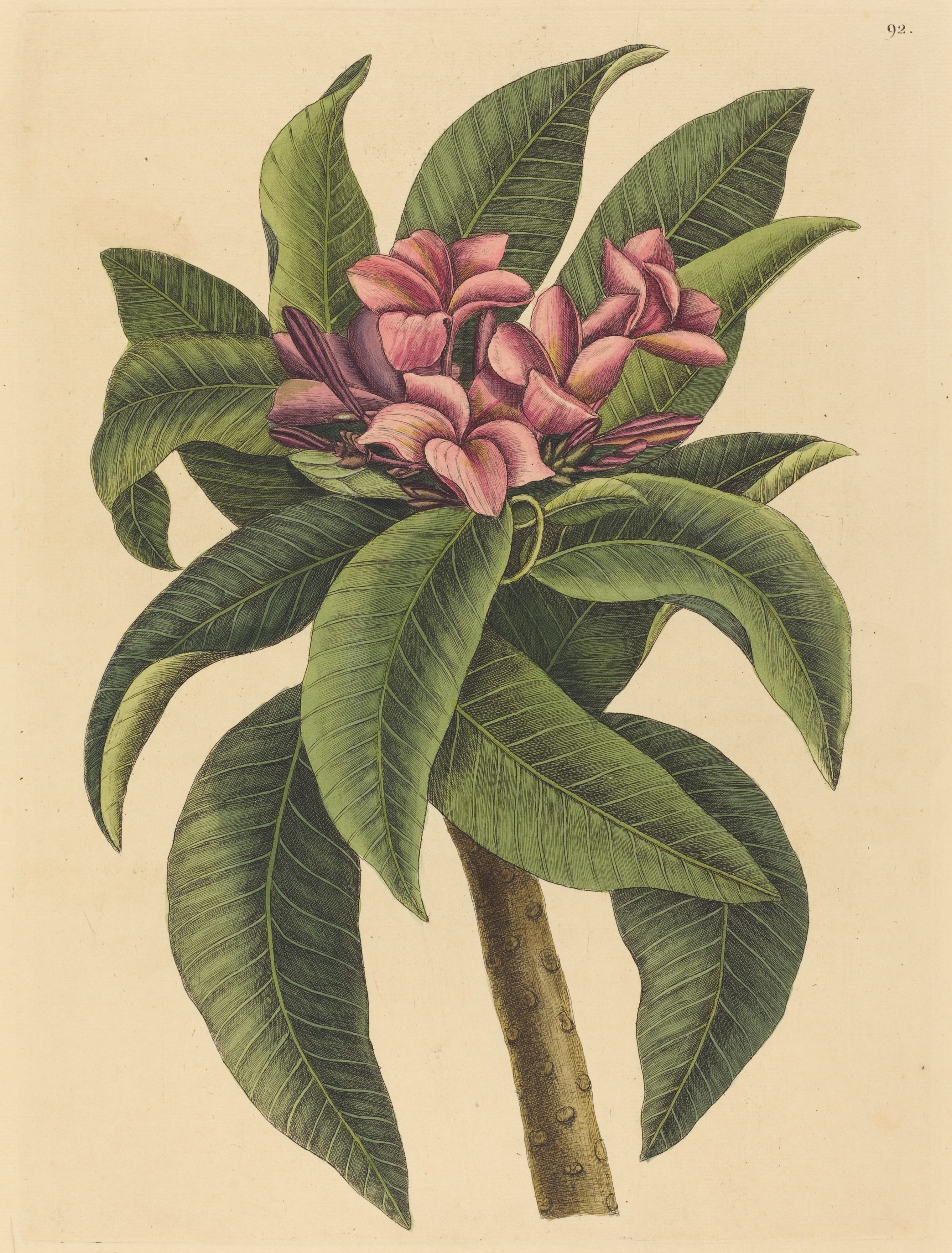
The Red Frangipani
A Caribbean bloom, recorded by the first naturalist to survey the colonial South.
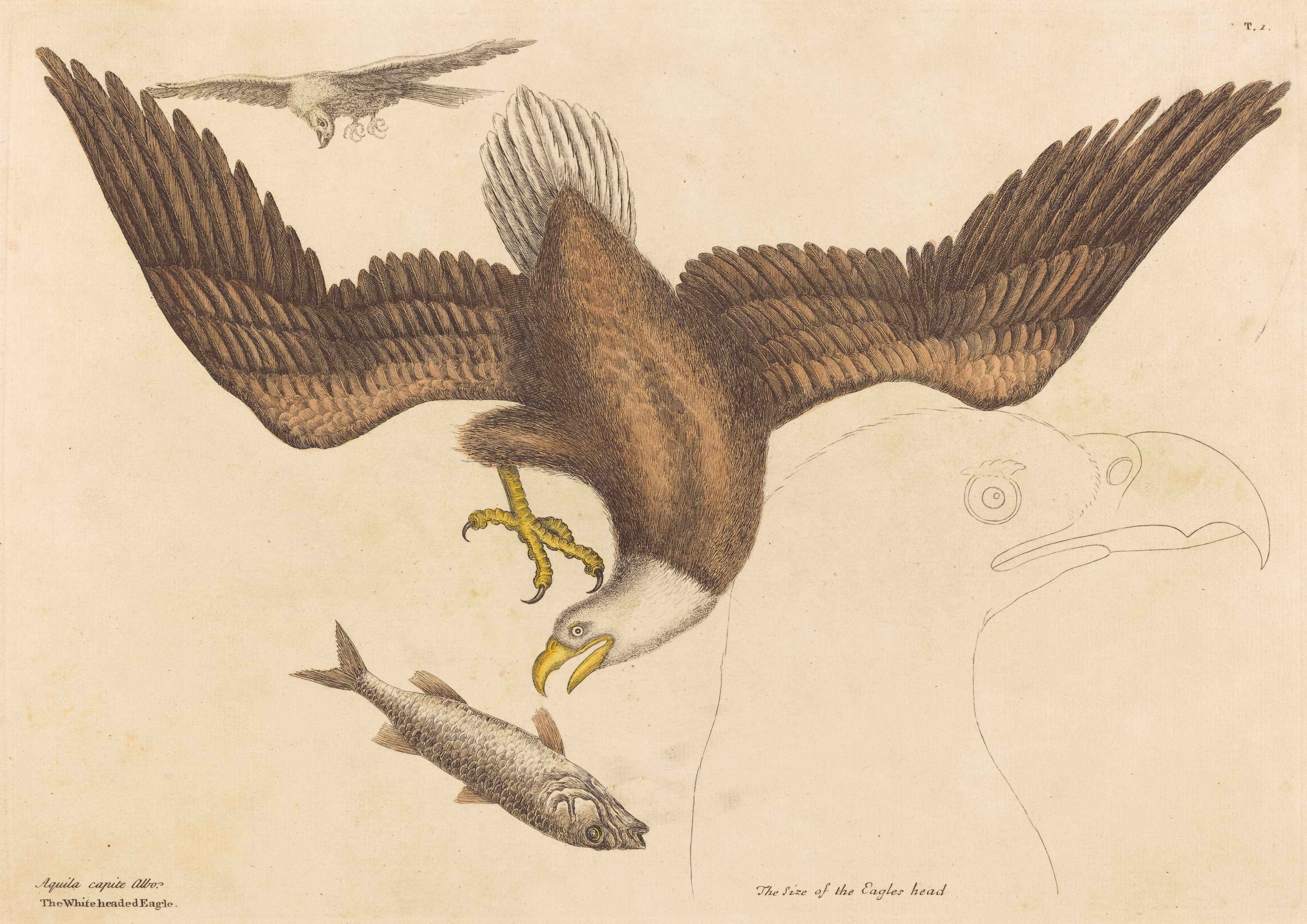
The White-Headed Eagle
The bald eagle, drawn seventy years before it became a national symbol.