The Baltimore Oriole
A mated pair and their remarkable woven nest, from The Birds of America.
- Work
- Baltimore Oriole, Plate 12, from The Birds of America
- Artist / naturalist
- John James Audubon (engraved by Robert Havell Jr.)
- Origin & date
- London, 1828
- Held by
- Wikimedia Commons
Format
The full-resolution scan, color-managed to the source — yours to print, study, and keep.
Size
$19.00
The story
Audubon gives the Baltimore oriole — named for the golden-and-black livery of the Calvert family, colonial proprietors of Maryland — a full domestic scene: a mated pair and a fledgling worked around the species' extraordinary hanging nest, a deep woven pouch lashed to a tulip-tree branch entirely from plant fiber, the male's contribution limited to gathering material while the female does the actual weaving. Audubon painted the tulip tree's distinctive flowers and leaves with the same care he gave the birds, following his consistent practice of setting each species within its real habitat rather than against a blank studio ground. What to notice: the nest itself, more than the birds, is the plate's real subject — few North American birds build anything as structurally ambitious, and Audubon clearly knew it was the more remarkable achievement.
About this reproduction
- Faithful reproduction of a public-domain work, sourced from Wikimedia Commons’s open-access release.
- Printed to order on 200gsm EMA matte art paper: smooth, no glare.
- Color-managed to the source scan.
- Ships in 5–8 business days; satisfaction guarantee.
From the same naturalist
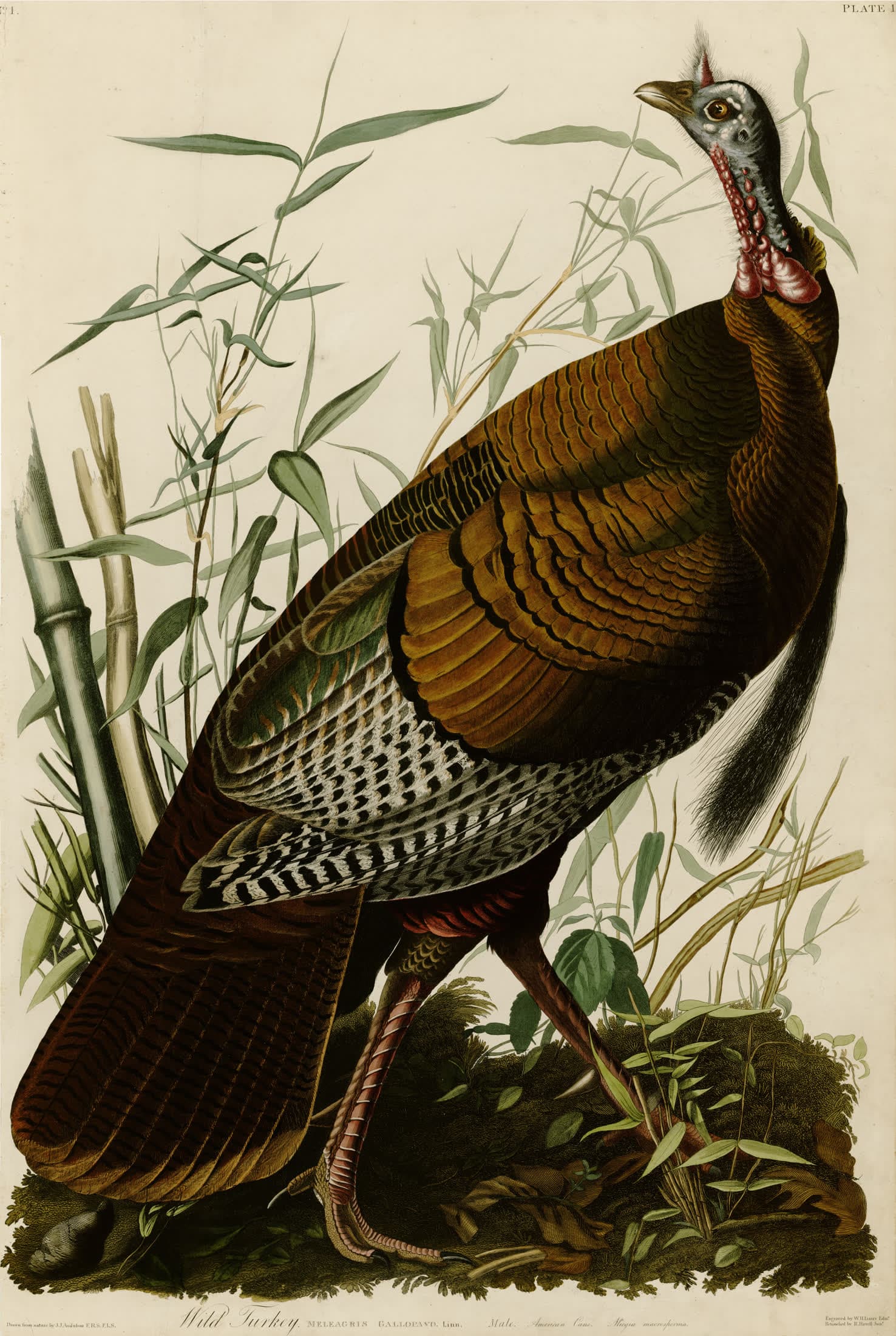
The Wild Turkey
Plate One of The Birds of America — the bird Audubon chose to open the whole work.
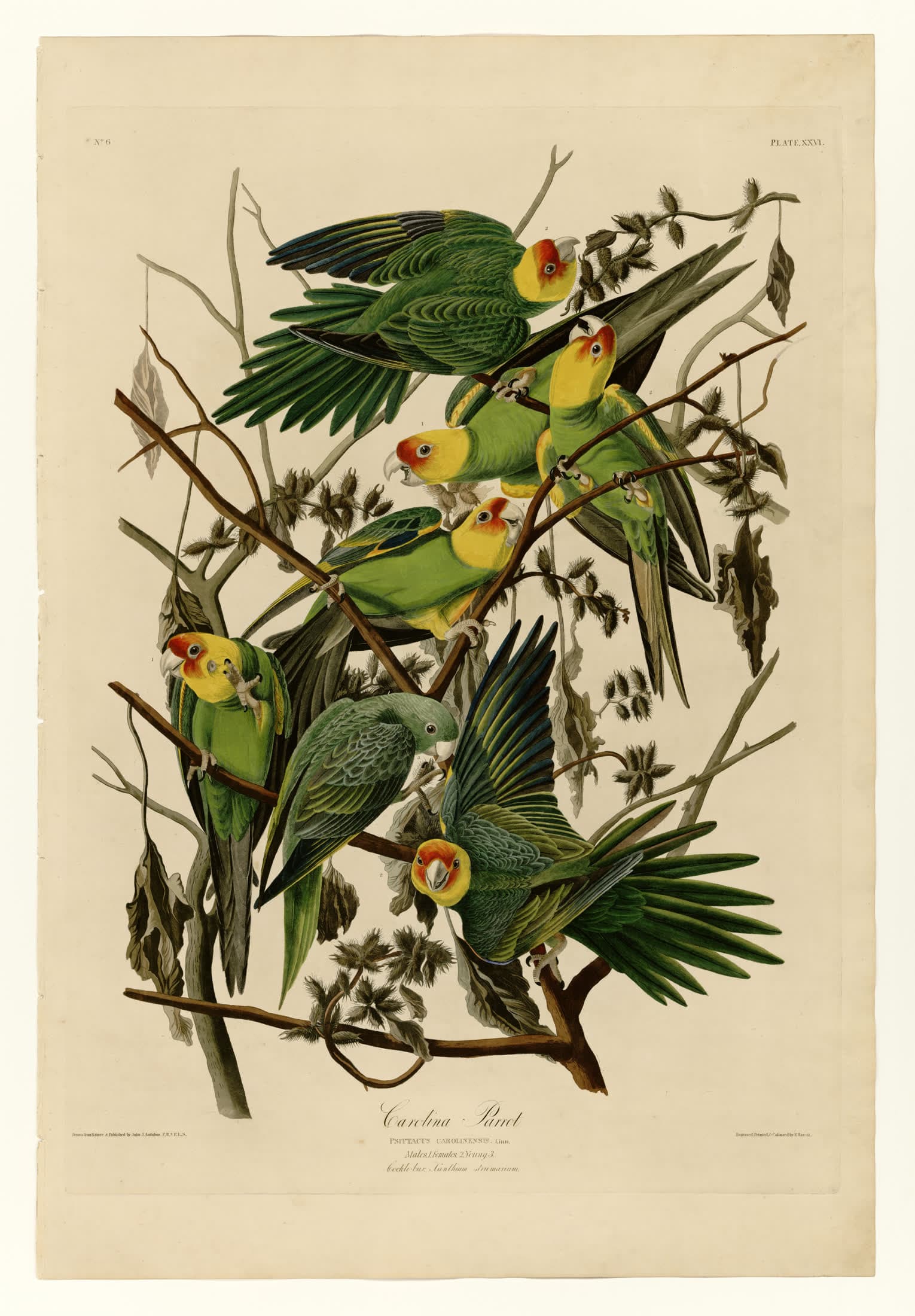
The Carolina Parrot
A flock of the only parrot native to the eastern United States — extinct since 1918.
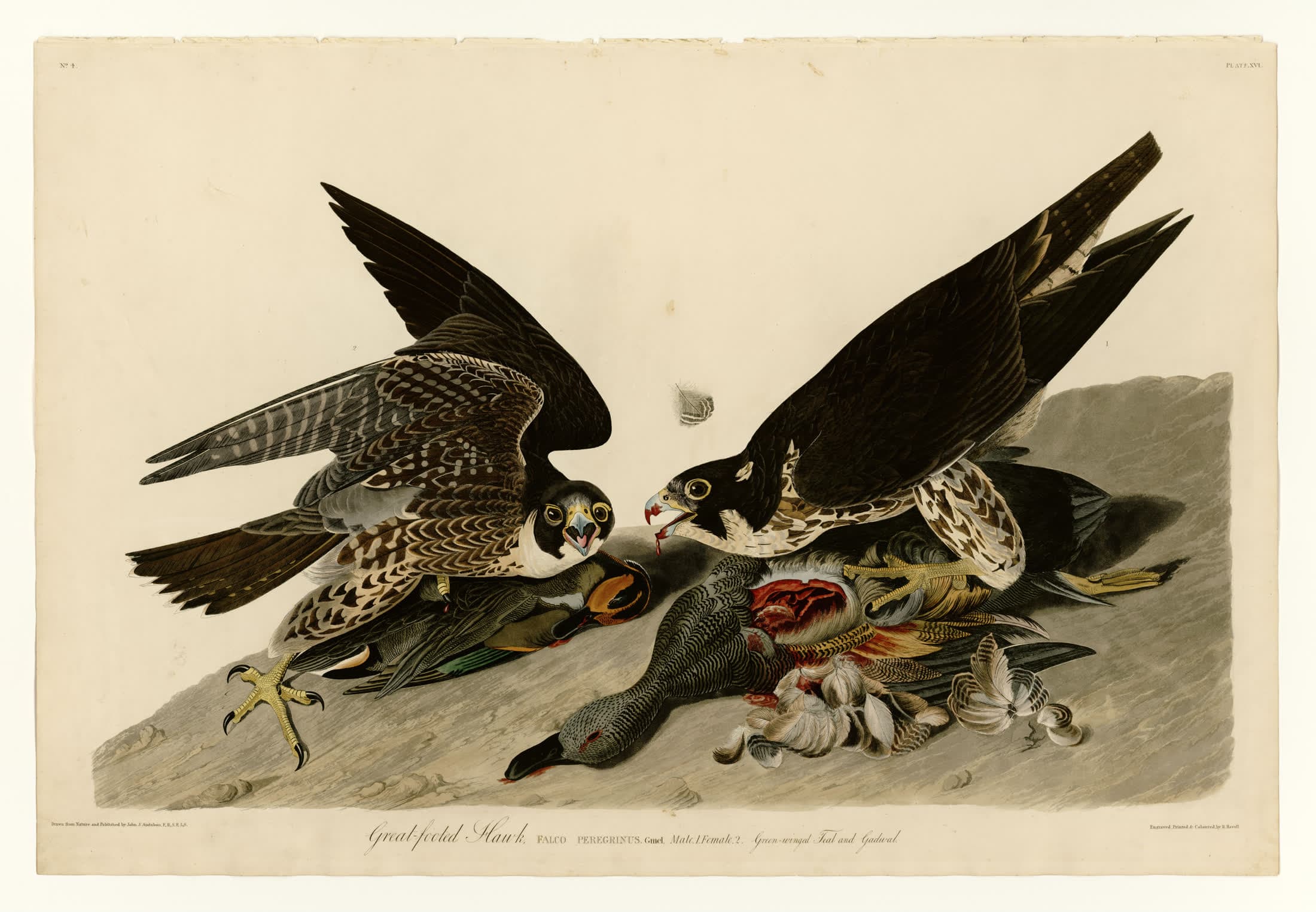
The Great-Footed Hawk
A pair of peregrine falcons over fresh kill — one of Audubon’s most violent plates.